Materials
2 min
COM without the surprises: minimums, testing and lead time
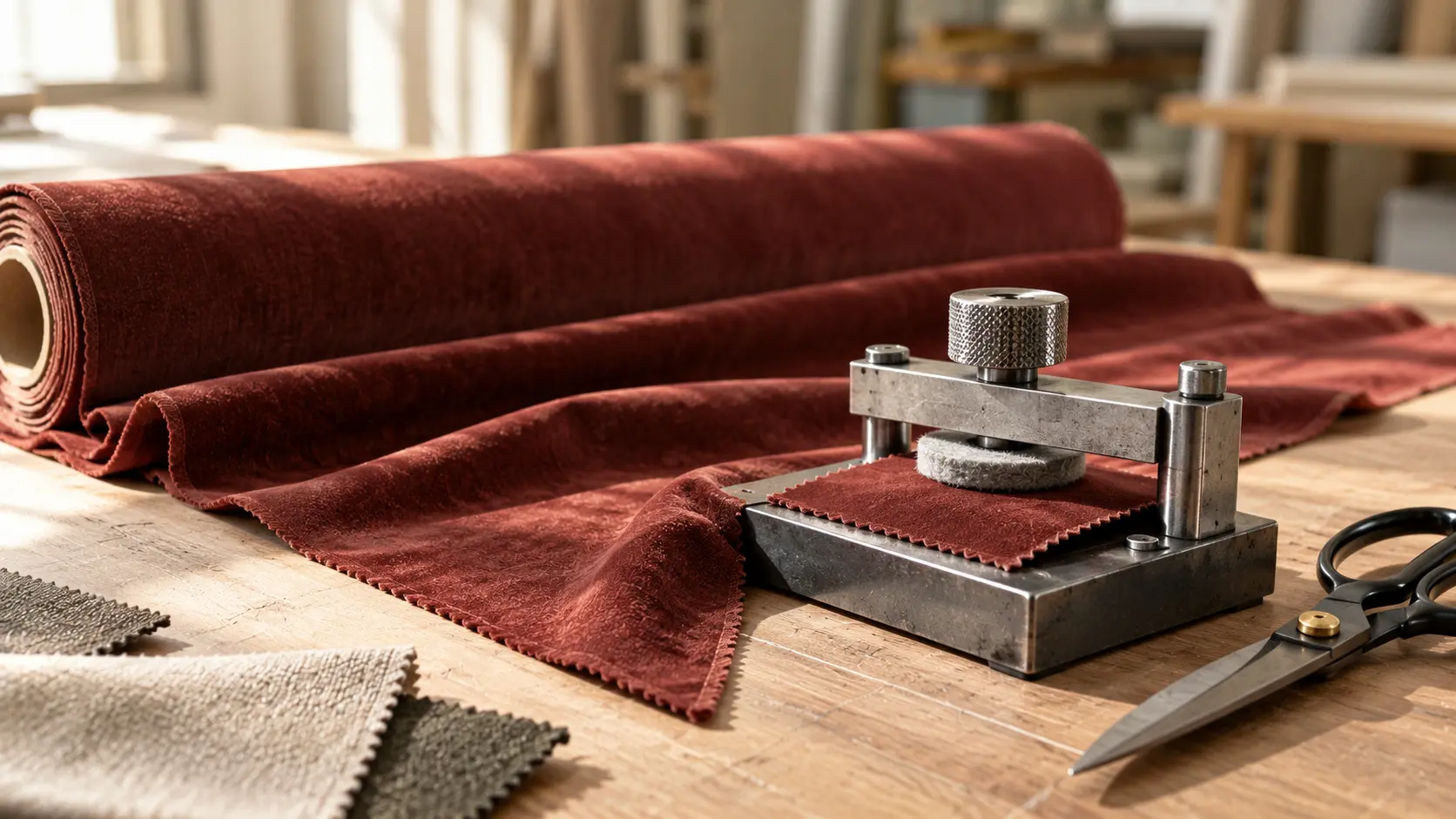
COM, customer’s own material, lets a designer put any fabric on a contract piece. It’s also the most common reason a seating order slips. Usually that isn’t the fabric’s fault. It’s because nobody planned for the time a fabric takes to travel, pass tests and get cut.
How much to send
Yardage depends on the piece, the fabric width and the pattern repeat. For a plain 54-inch fabric, our starting points are:
Sofa: 15 yards
Banquette: 8 yards per 10 feet
Lounge chair: 3 yards
Dining chair: 1 yard
Large repeats, railroaded patterns and stripes that must align across cushions add more. We confirm exact yardage on the shop drawing, and we’d rather you send 5% extra than wait for a second roll from a different dye lot.
What we test
Before we cut a single piece, a 1-yard cutting goes through three tests:
Abrasion. Contract seating needs at least 30,000 double rubs on the Wyzenbeek test. Most hospitality lounges want 50,000 or more.
Flammability. The fabric with our fill must pass CAL TB 117-2013, and NFPA 260 where the brand or fire marshal requires it.
Seam slippage. Loose weaves can pull apart at seams under load. If a fabric fails, a knit backing usually fixes it.
You’ll hear within 5 business days whether the fabric passes, needs a backing or should be reconsidered.
Lead time
COM adds one week to the production lead time, counted from the day the full yardage arrives at the plant. Not the day it’s ordered, and not the day the cutting passes. That’s the date to watch.
Four ways to keep COM on schedule
Send the cutting with the spec, before the drawings are signed.
Order full yardage the day the cutting passes.
Ship to the plant, labeled with the project and piece, not to the designer’s office.
Keep a backup from our library in mind. If a dye lot is delayed, a library fabric can keep a Quick Ship frame on schedule.
COL, customer’s own leather, works the same way, with hides instead of yards. Ask us for a hide calculation on the shop drawing.
Written by
Ingrid Solberg
Trade & Specification Lead
Journal
Keep reading

Counting back from opening night: when to order FF&E
Most FF&E delays are baked in before anything is built. Here’s how to count back from your opening date, week by week.
2 min

What a shop drawing should tell you, and what to check before you sign
A shop drawing is the contract for how a piece will be built. Here’s what ours include and the six things worth checking before you sign.
2 min

Specifying decorative lighting for hospitality: color, dimming and glare
A fixture that looks right in the showroom can look wrong in the room. Color temperature, dimming and glare, and how to specify each.
2 min